
With an open-source solar kit, a Ghanaian NGO learned in two weeks to build, run and teach a machine that turns shoreline waste into useful objects. The story of an empowerment process that is ready to scale.
Author: Marco Bernardo, founder of SunFactory Project, contributor to the Antenna Foundation
Context: SunFactory Project residency in Accra and the Volta Region (Ghana), 26 October – 7 November 2026, with Plastic Punch NGO
Related resource: Instructor guide "Solar Plastic Recycling: Build it, Run it, Teach it", Ghana Low-Tech edition
Two free resources, one shoreline
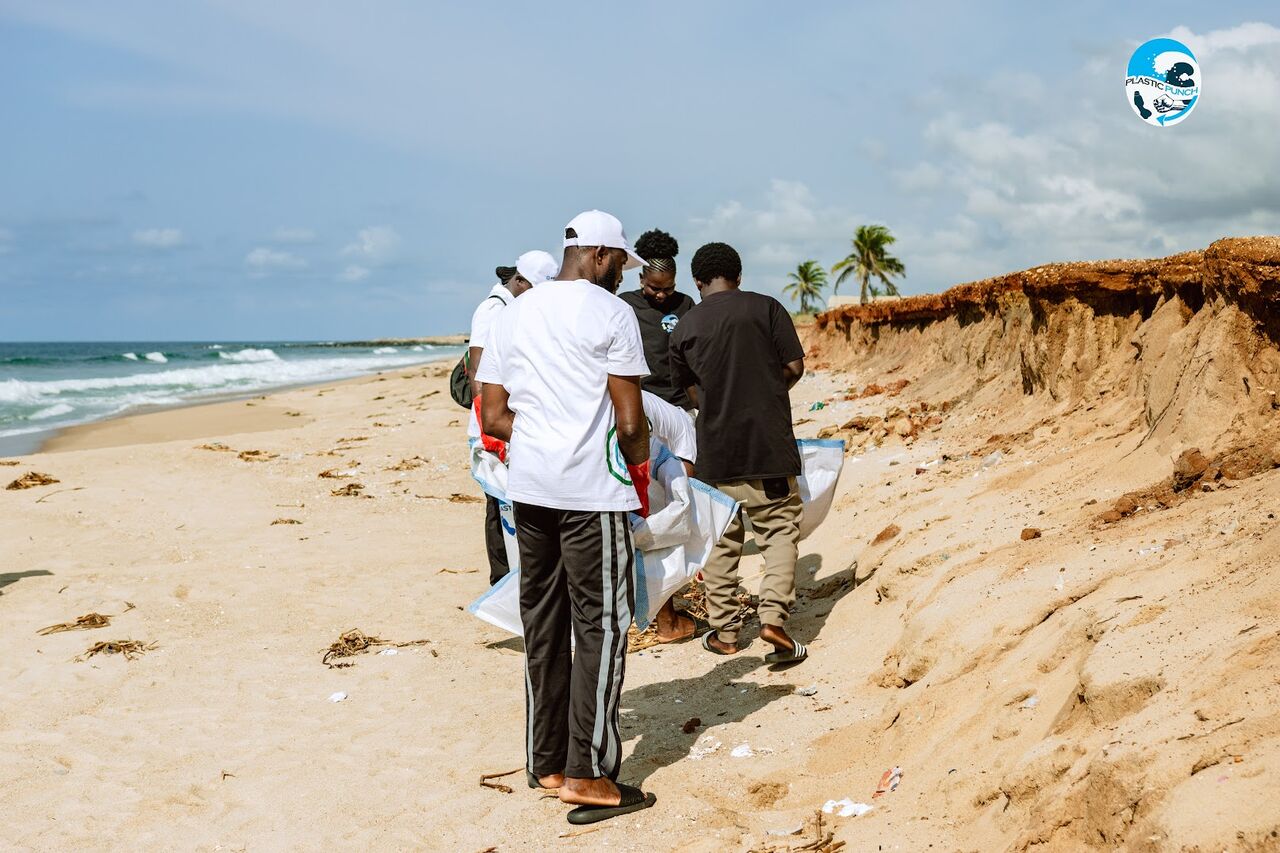
On Ada beach, every tide brings plastic: bottle caps, water sachets, woven bags, fishing rope. Above it, the West African sun beats down almost vertically, all year round. For decades these two realities lived side by side without ever meeting. One is a burden, the other is taken for granted.
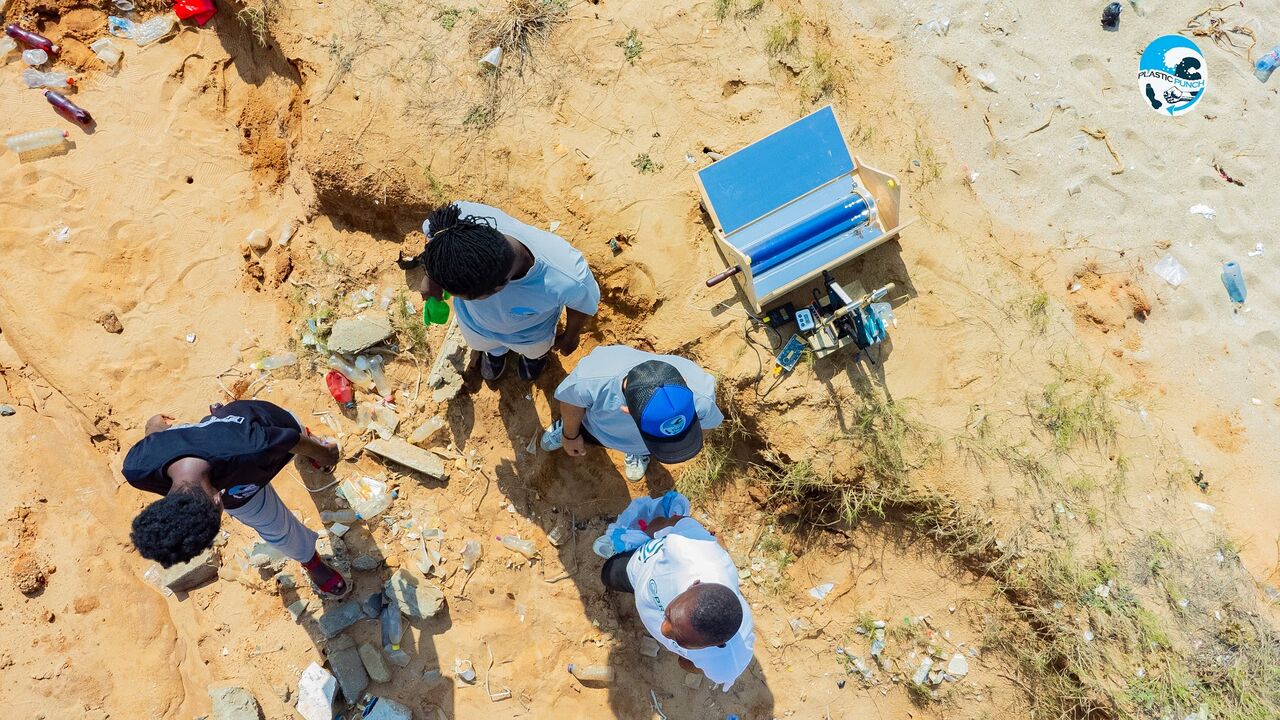
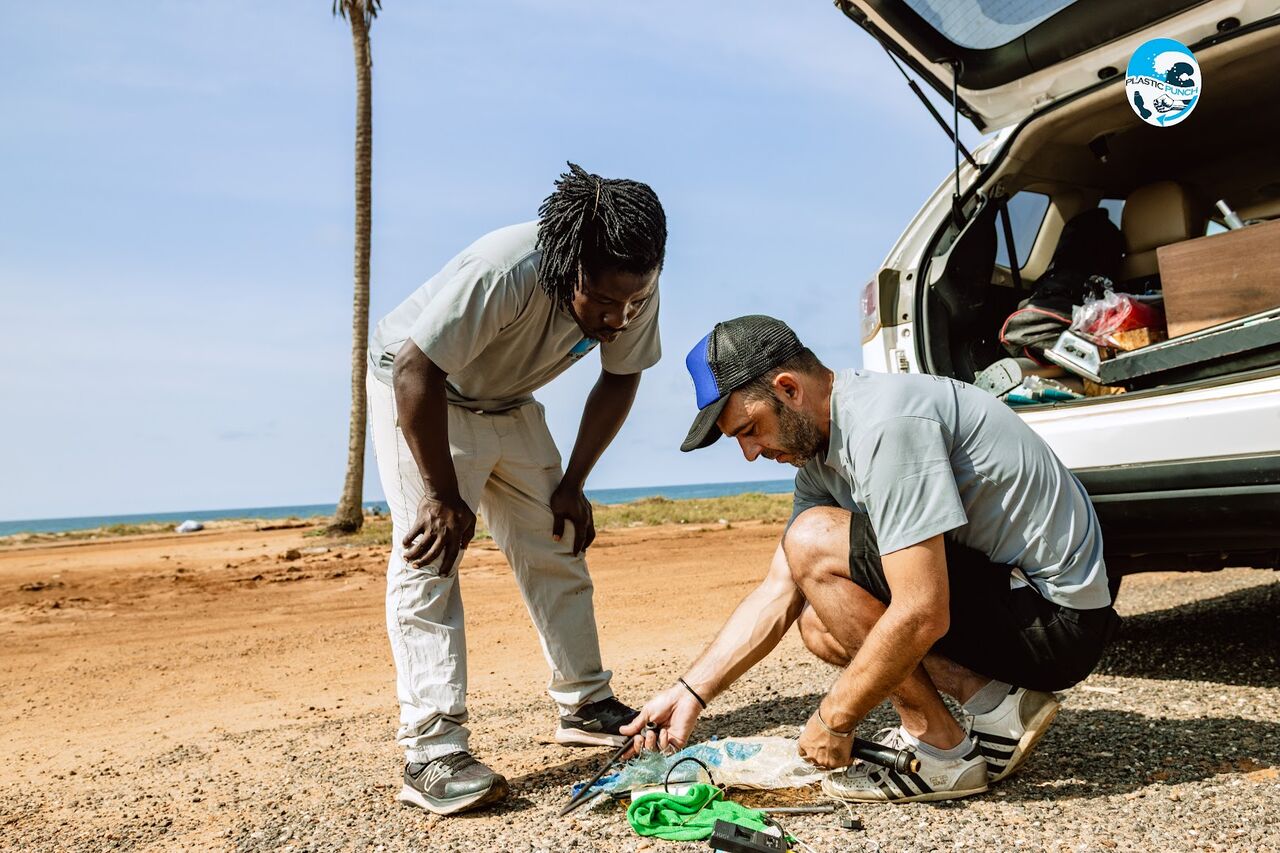
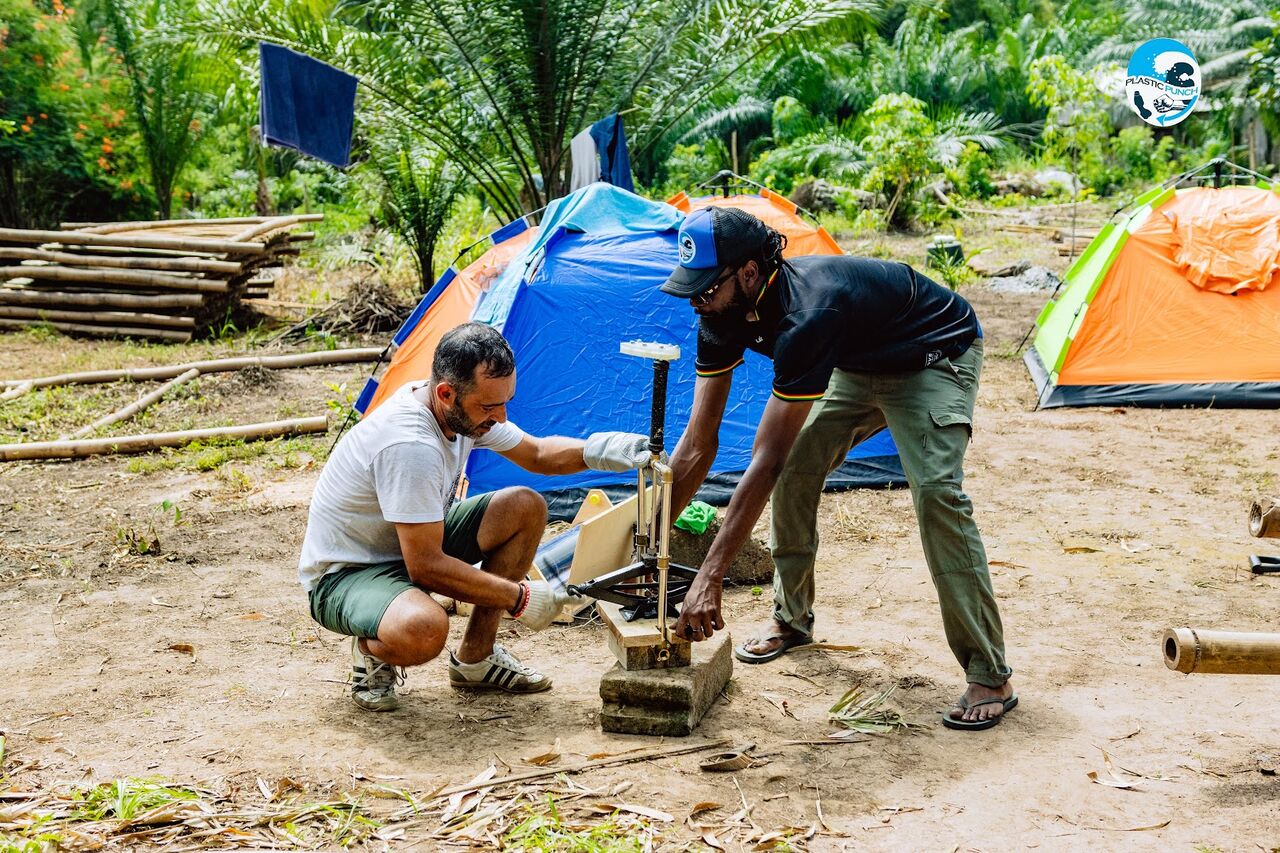
The SunFactory Project residency in Accra started from a simple idea: the raw material and the energy are already here, and they are free. What was missing was the tool and the know-how to bring them together. A mirror concentrates sunlight onto a vacuum tube. The tube heats a steel cartridge filled with sorted plastic to 200 °C. A manual injector, driven by a car jack, pushes the molten material into a transparent resin mould. A few minutes later, a piece of beach waste has become a bottle opener, a wrench or a keyring.
No grid, no fuel, no factory. The result is a value-added product, made locally, from what the coast throws away and what the sky provides.
A wish made in 2020, fulfilled in 2026
The story begins in Geneva. In 2020, Richmond Kennedy Quarcoo, founder and executive director of Plastic Punch and a former merchant navy officer, visited Marco Bernardo and discovered the solar injection technique developed with Yann Camponovo (PlastOK). He left with a wish: to bring solar recycling to Ghana, and to make it Ghanaian.
Six years later, the Accra residency answered that wish. Plastic Punch, founded in 2018 and recognised in 2025 at Ghana's first Plastics Leadership Awards, has spent years running beach clean-ups, school programmes, an animated cartoon series and community cinema nights. Its rallying cry: "Punch the plastic out of the system!" What it lacked was a way to show that waste can become a resource again, here, now, with its own hands.
Indigenise rather than transfer
The key word of the residency is not "technology transfer". It is indigenisation. The instructor guide that came out of it defines it in one sentence: a technology is indigenised when it no longer depends on the people who brought it.
In practice, nothing was imported as is. The concentrator was resized for Accra's latitude (5.6° N), where a model designed for Lisbon or Geneva would waste light. An Accra timber supplier cut the panels from the plans. A local welder adapted the jack and made the crank and the pistons. Neighbourhood plumbers supplied fittings and reducers. Then the team improved the machine: a coarse-thread jack for faster injection, a reinforced braking system, and a second version of the concentrator with glass mirrors.
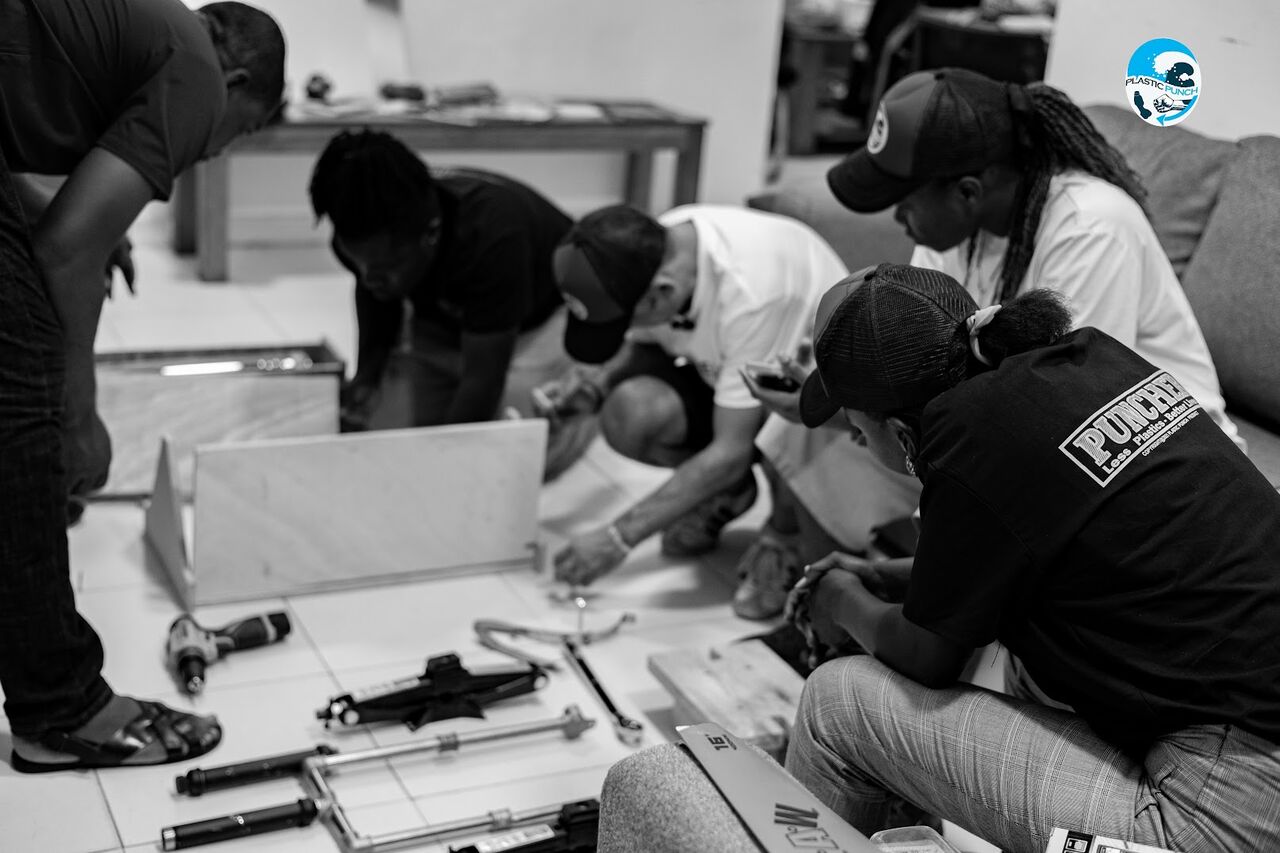
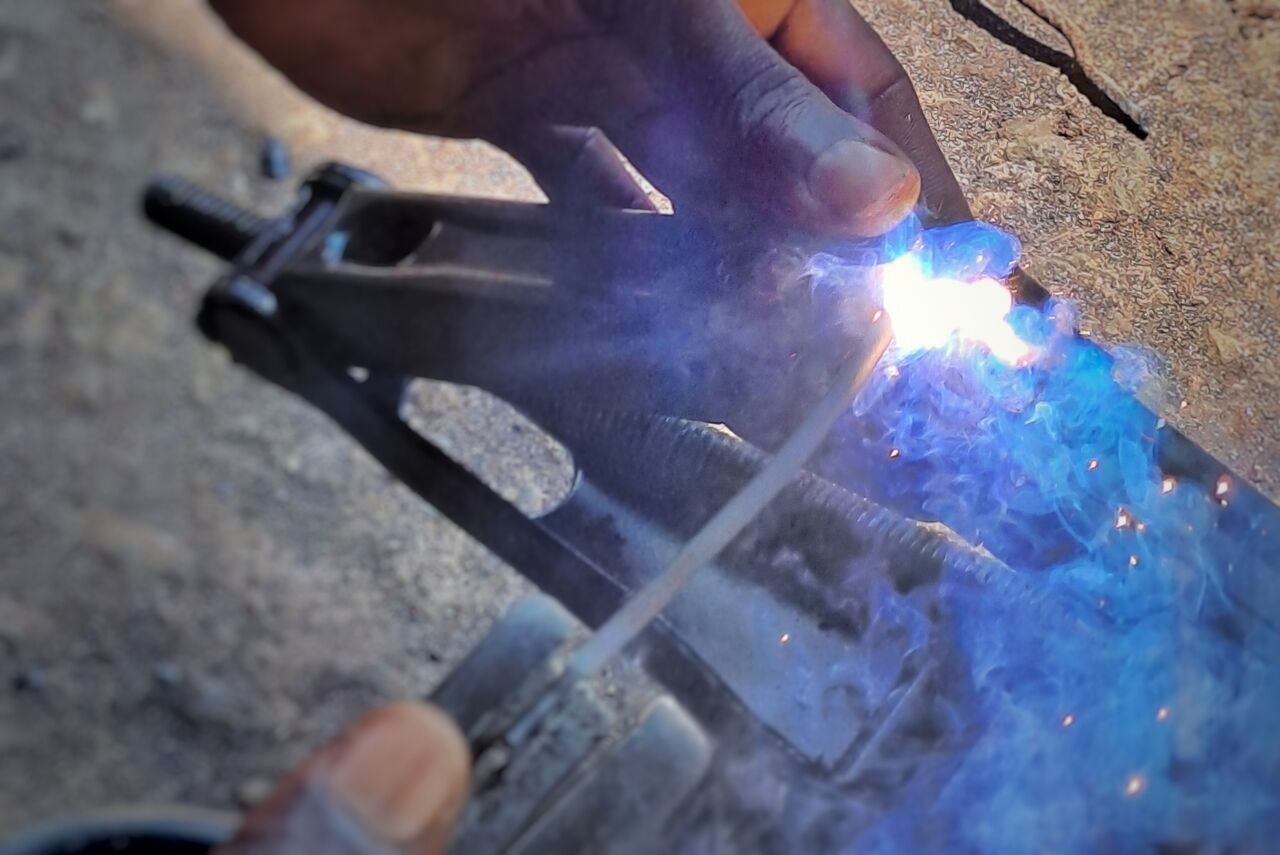
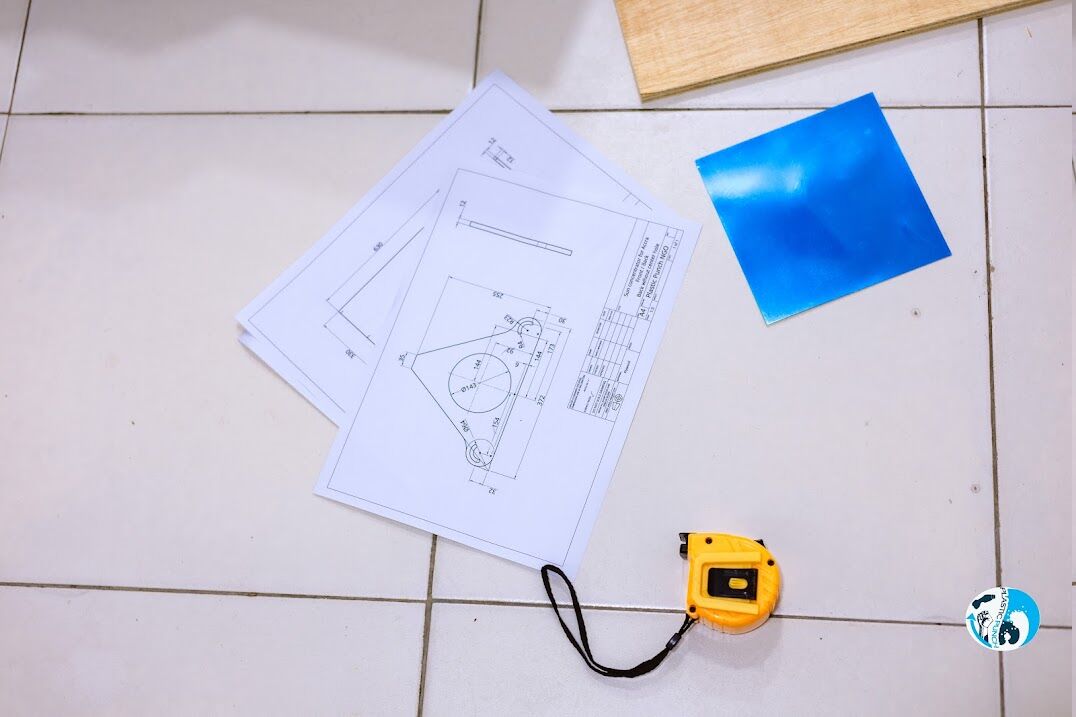
On day ten, the full injection cycle was run by James Dedidal, Plastic Punch's logistics lead, on a kit built by Plastic Punch. By the end of the residency, the NGO had two working kits, a trained team, a network of craftspeople and the ability to teach others in turn.
Schools and beaches as laboratories
Plastic Punch's strength is its relationship with communities. The residency built on it from the first week.
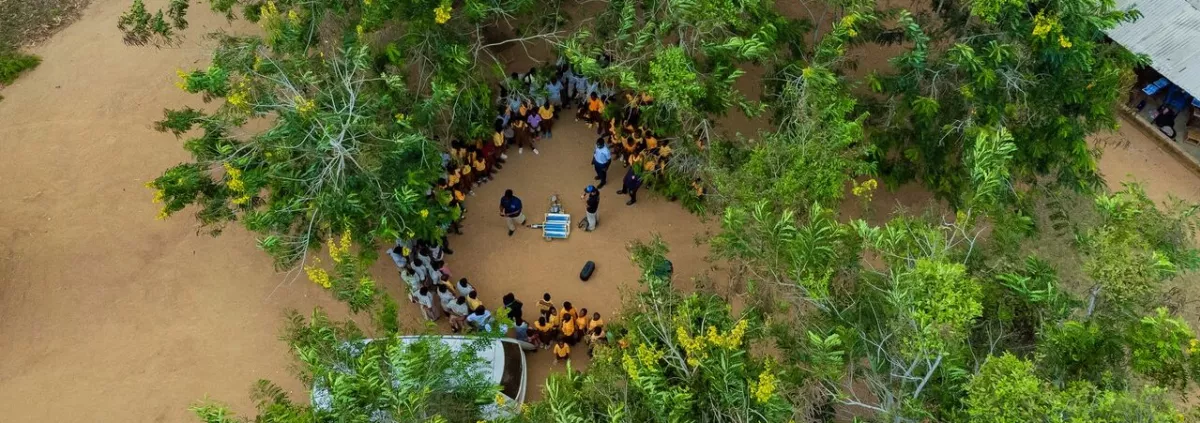
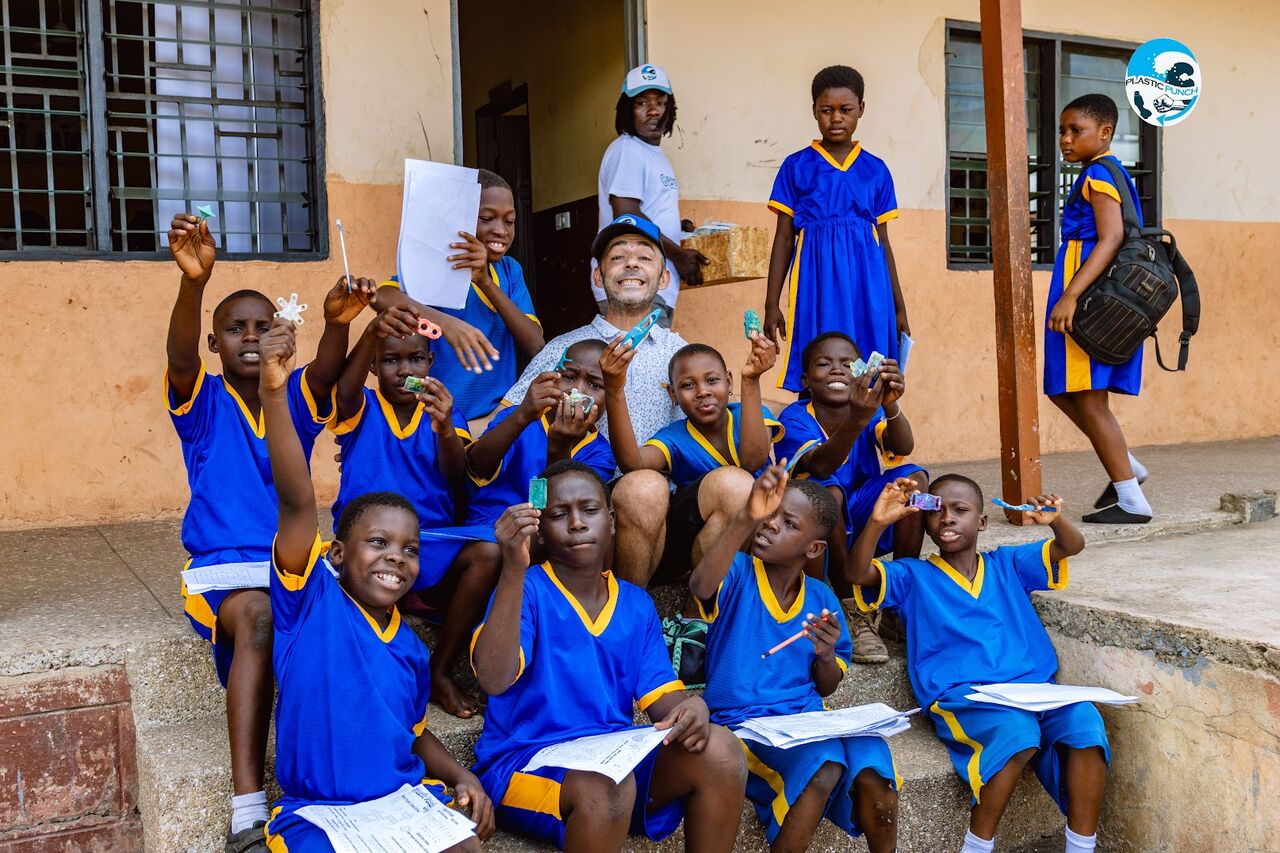
At Accra's Street Academy, which welcomes children from Jamestown, Ussher Fort and Ga Mashie, the first public demonstration combined a screening of the Plastic Punch cartoon, a plastic quiz and a live injection. Every child went home with an object made by the sun.
At Ada Foah, the team joined Protego's shoreline monitoring, injected freshly collected plastic right on the beach, explained the process on air at Radio Ada and organised a film night in a fishing village. At Tojeh Basic School, explanations were translated into the local language: knowledge in our own words. At the Regional Maritime University, the first injections were analysed the way you run an experiment, temperature by temperature.
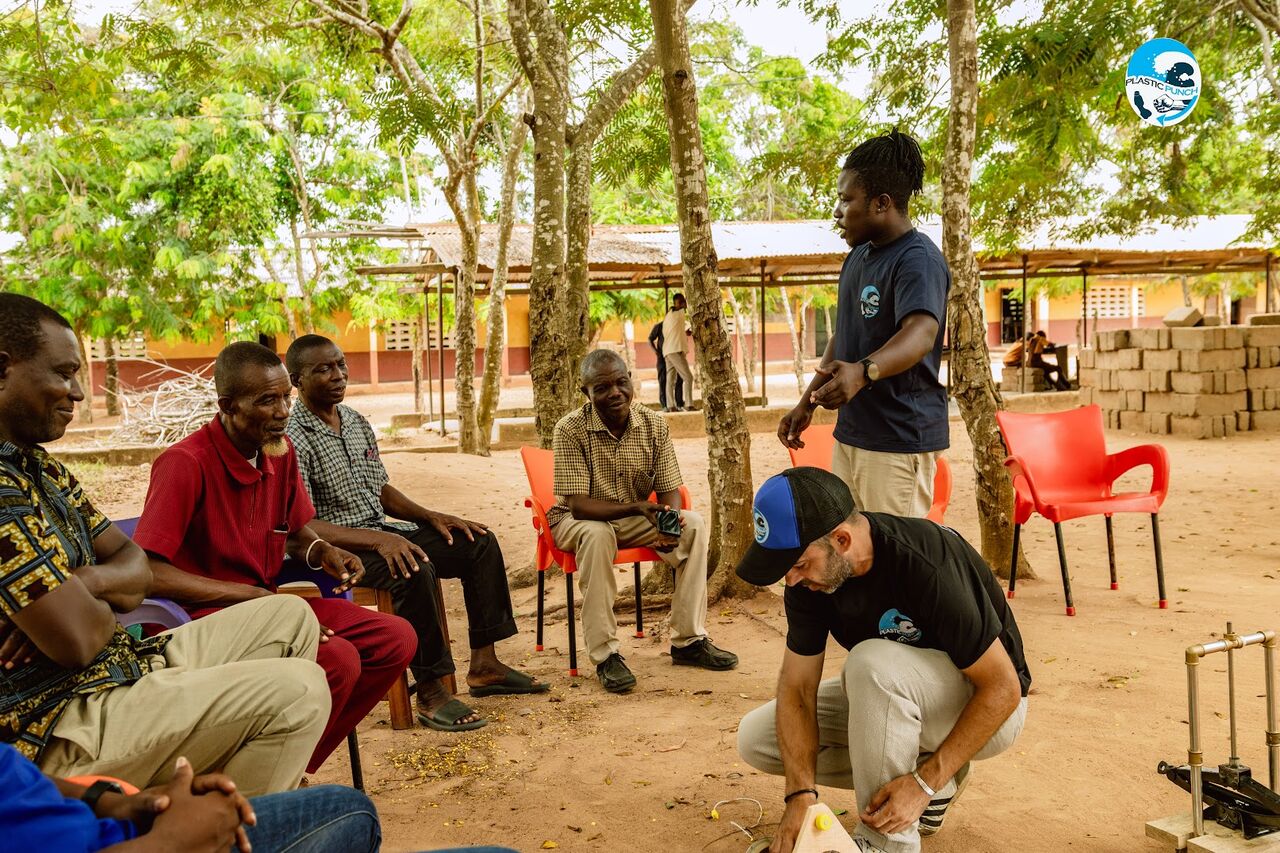
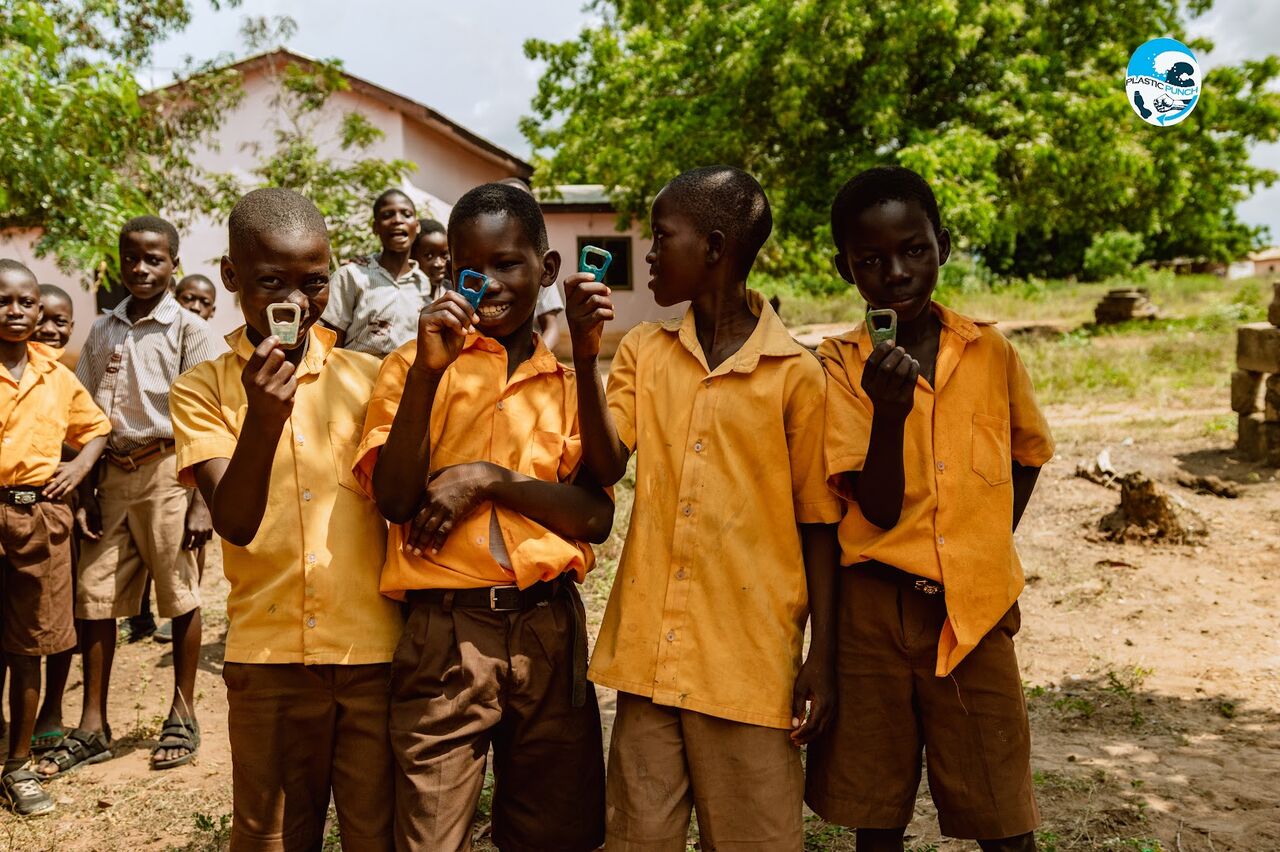
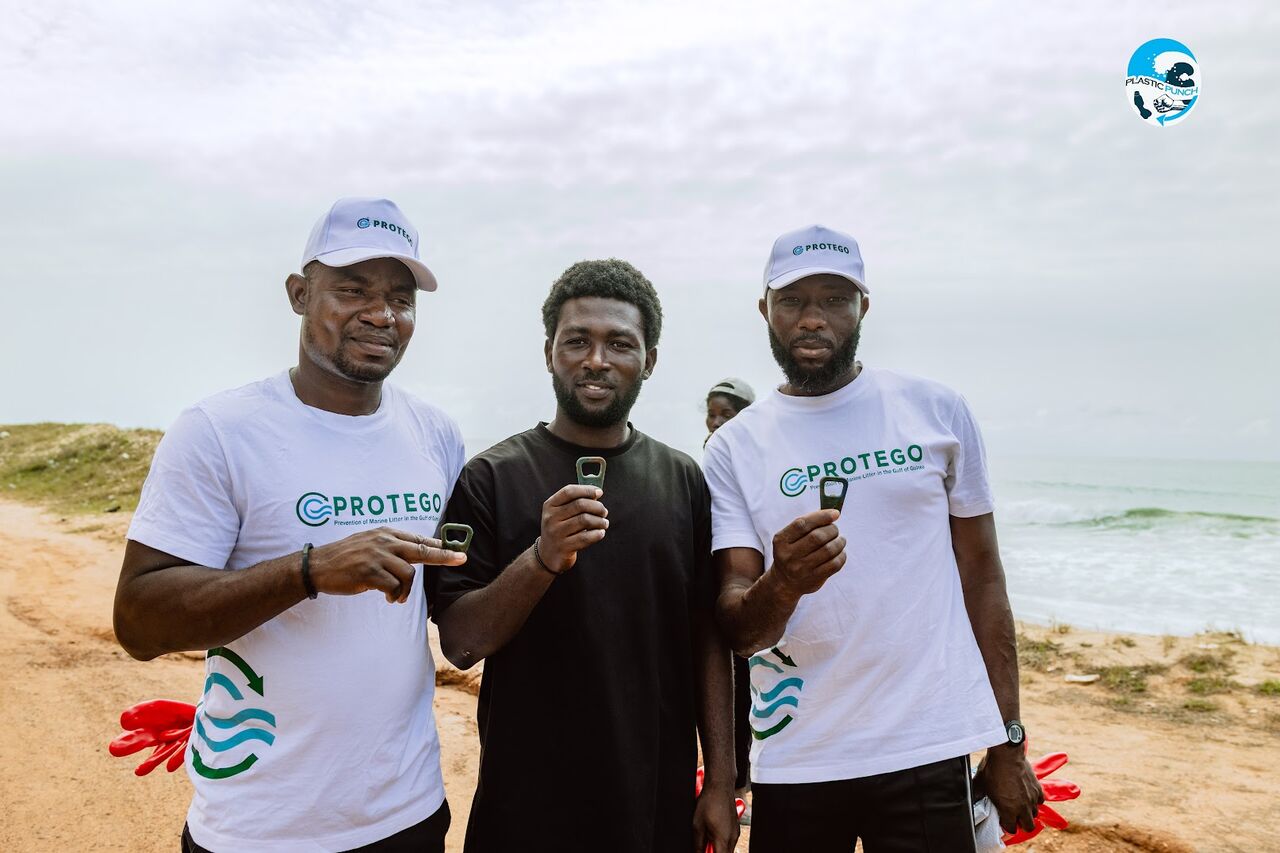
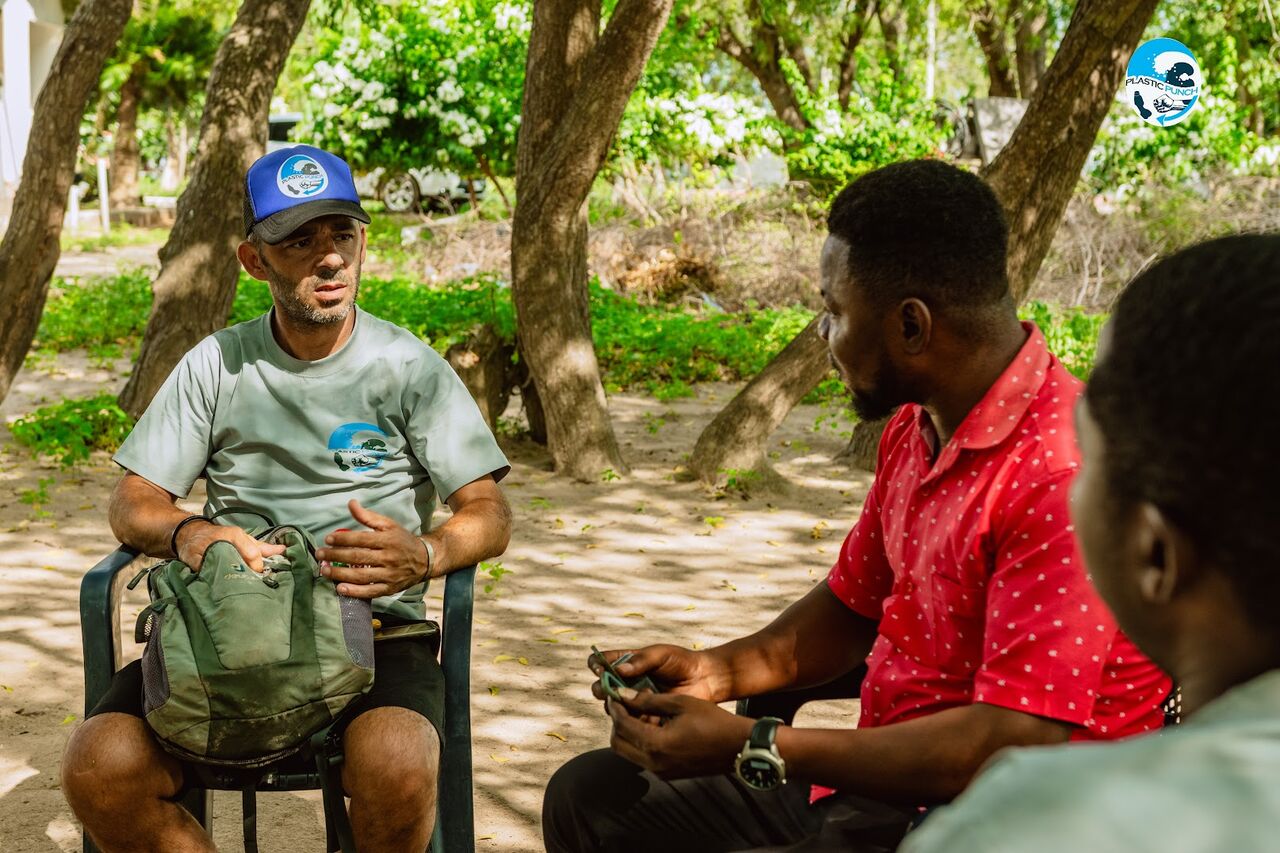
Failures were part of the learning. On a hazy day in Ada, the tube only reached 145 °C: no injection possible. The demonstration held up thanks to objects already made, the solar dish and Plastic Punch's films. That lesson became a rule in the guide: always have a plan for days without sun.
Last stop, off-grid: at the Agumatsa Eco-Lodge, near the Wli waterfalls in the Volta Region, the team injected bottle openers in Ghana's colours, red, gold and green, from collected bottle caps, trained Plastic Punch members on site and tested local bamboo for a first dome prototype.
Objects that carry a message
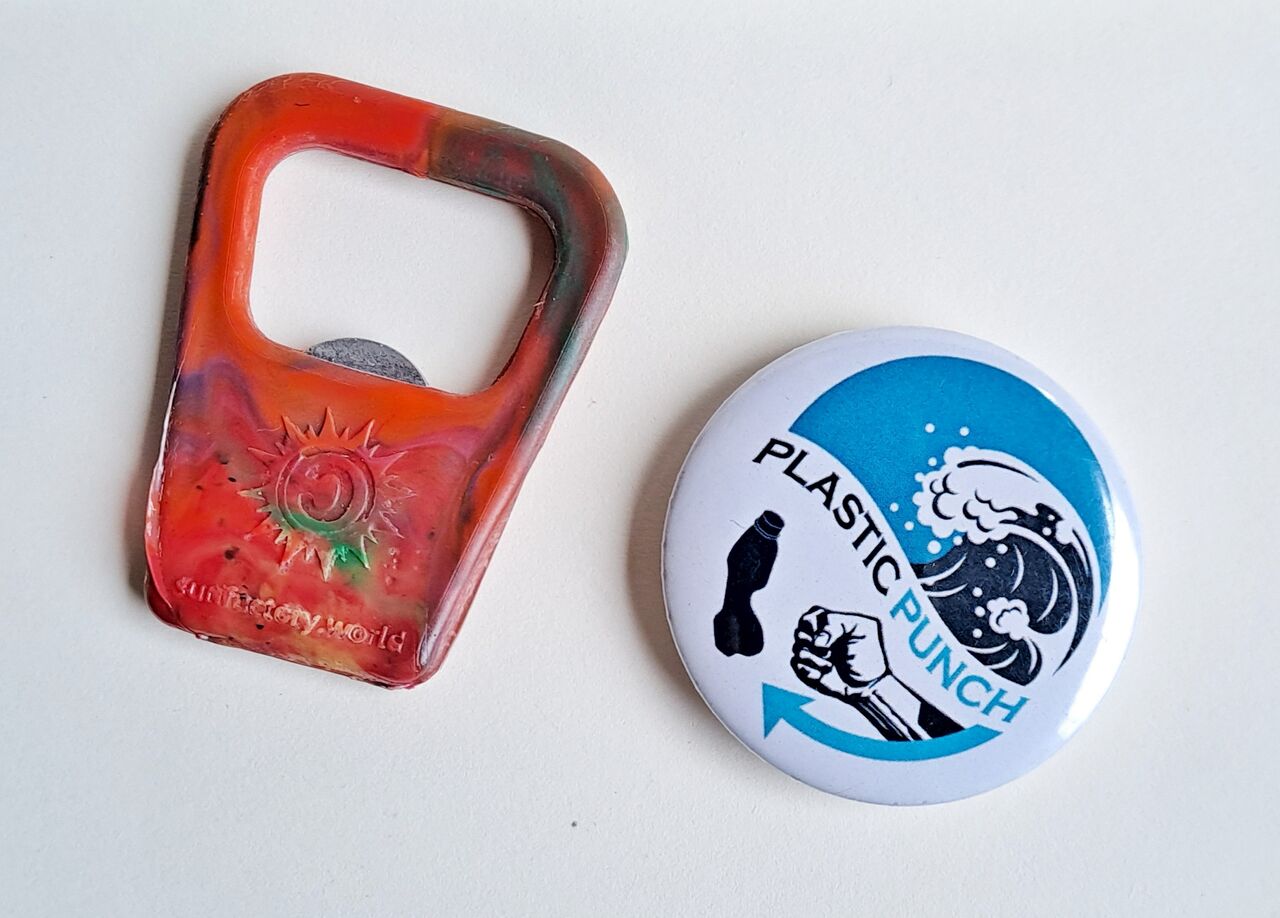
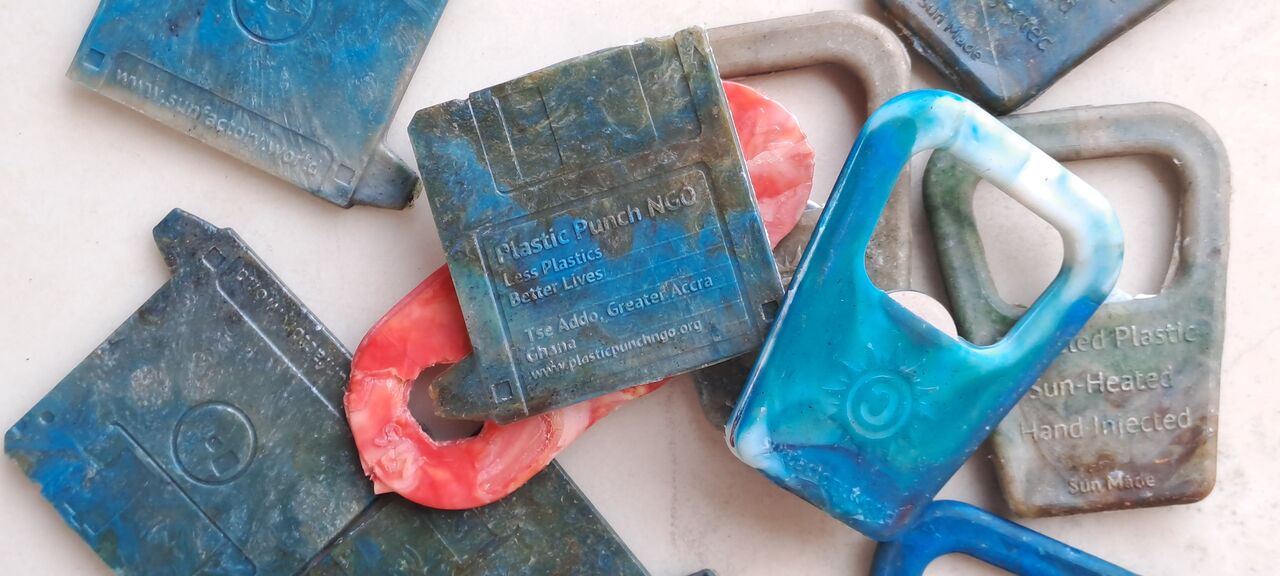
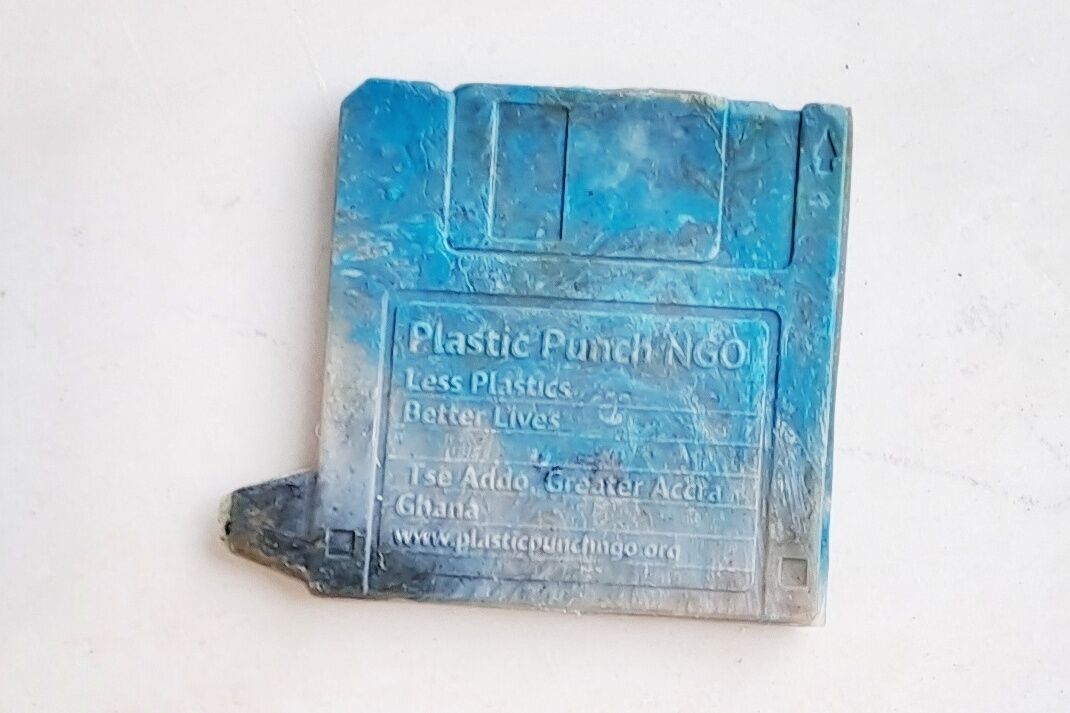
Three moulds were used during the residency: a bottle opener, an M4/M6/M8 wrench and a keyring shaped like a floppy disk. The last one is a symbol. The floppy disk stands for data, and for SunFactory Project data and knowledge must be common, shared and sovereign. Each keyring carries an NFC chip: hold it to a phone and it opens the project's open resources. A small physical key to free knowledge.
Open licences, the engine of a new sector
Everything the residency produced is published under open licences: the guide under Creative Commons BY-SA 4.0, the machines under the CERN Open Hardware Licence (CERN-OHL-S). This is not an ideological choice. It is what makes the empowerment last.
No one can lock the knowledge away. No patent, no licence fee, no permission needed to build a machine.
Attribution spreads Plastic Punch's name. Every copy of the guide, in Lagos, Dakar or Nairobi, must credit its authors. Plastic Punch becomes the African reference source.
Improvements flow back to the commons. Thanks to the share-alike clause, a better jack designed in Togo will have to be shared in turn, and will come back to Accra.
Open does not mean free of charge. The guide says it plainly: Plastic Punch can sell objects, kits, workshops and training. The open licence does not block the economy, it enables it. It allows an NGO to grow a local solar plastic recycling sector, with its own craftspeople, trainers and products.
SunFactory Project, a commons generator
Behind the residency, a model takes shape. SunFactory Project works as a commons generator: an idea funded once, documented, tested in the field, then published so that anyone can reproduce it without paying for the research again. Each impulse produces knowledge that others take up, adapt and improve, and those improvements flow back to the commons.
This is the logic of contribution, as championed by the contributive ecosystem the Antenna Foundation belongs to: mutual aid, sharing and cooperation, in service of the power to act of people and places. Knowledge there is an information commons, freely reproducible. Those who contribute, a Ghanaian NGO, a Portuguese school or a fablab, gain the ability to produce, sell and make a living from what they make.
In Accra, this logic became concrete. An impulse from Geneva and Lisbon was taken up by a local organisation, adapted to its sun and its plastics, and turned into an activity. The loop is simple: free waste and sunlight, open knowledge, local craftspeople, value-added objects, income and jobs on site. It can be reproduced wherever there is plastic and sun.
Scaling up: the instructor guide as a vehicle
The Ghanaian experience matters beyond Ghana. It shows that technical knowledge can move from one continent to another in two weeks, provided it is designed to be taught. That is the purpose of the instructor guide, available in two sister versions built on the same core kit:
•the FabLab version, born from the Lisbon residency with the Polytechnic Institute of Lisbon (ESELx), Prof. André Rocha and FabLab Benfica, for spaces equipped with digital cutting;
•the Low-Tech version, born in Accra with Plastic Punch, for building with a saw, a drill, a timber supplier and a welder.
The Low-Tech guide is organised into six modules: understand, build, know your plastics, moulds, run the process, then pass it on. It offers a five-level pathway from observer to instructor, with validation checklists. It is available in English, French and Portuguese. The 3D model of the concentrator is parametric: change the solar angle and every part is recalculated for Kumasi, Tamale, Lomé, Abidjan or Lagos.
This is where scaling happens. Plastic Punch is now the West African contact point of the SunFactory Project network. Every instructor trained in Accra can train others. Every coastal city can build its own machines with its own craftspeople.
One cap, one sachet, seven goals
Take a simple bottle cap, or one of those plastic sachets and bags so light that the wind carries them off. Flying plastics are a plague: they snag on trees, clog drains and cause floods, choke livestock and end up in rivers, then the sea. You find them on beaches, but also in the streets of Accra, along roadsides, in fields and in schoolyards. All over the world, billions of caps and sachets end up in the wrong place. Let's follow their journey.
•We pick them up. A street, a river or a shoreline gets a little cleaner. Good for nature, on land and in the water (SDG 14).
•We learn with them. Children sort them and understand where they come from. They see that waste is a resource and that their actions matter (SDG 4).
•The sun melts them. No socket, no gas, no bill: just a mirror and a clear sky. Clean energy, free in most countries of the Global South, and it does not heat the planet (SDG 7 and 13).
•They become useful objects. Bottle opener, keyring, nut, spare part: yesterday's waste becomes today's raw material (SDG 12).
•They give someone a living. The object is sold, repaired, taught. A person trained locally gains an income and a trade (SDG 8).
•They travel without moving. The plans and know-how are shared under an open licence. A workshop in Togo, a school in Brazil or a fablab in Europe can do the same thing tomorrow, and improve the method for everyone (SDG 17).
In short, worthless waste becomes the starting point of a chain that cleans, educates, produces, employs and connects. No big factory, no truck, no major investment needed. All it takes is sun, plastic, hands and shared knowledge. Those four ingredients exist almost everywhere on the planet.
That is the lesson from Accra. A community-led project can improve the environment, build skills and start a small economy, all at once. What worked on a beach in Ghana can work in a city, a valley or an island on the other side of the world. It is time to scale up.
Join the movement
•Reproduce: build your kit with the Low-Tech guide or the FabLab guide.
•Improve: share your changes under the same licence; they will flow back to the commons.
•Translate: the guide exists in English, French and Portuguese. Other languages are welcome.
•Connect: contact Plastic Punch for West Africa, or join the Energy group on the Antenna Hub.
For the full story of the project, from Ouagadougou to Geneva, Aveiro, Lisbon and Accra: Sun Factory Project, our history.
In the press
•Citi Newsroom, 13 November 2026: Plastic Punch turns plastic waste into economic opportunities through solar technology
•MyJoyOnline, 13 November 2026: From shoreline waste to useful products
•Ghana News Agency, 10 November 2026: Street Academy children learn to turn plastic waste into economic value
Licence and acknowledgements. Text published under CC BY-SA 4.0. Photos: Gabby (Plastic Punch), unless otherwise stated; they are shared with the consent of the people photographed, as part of SunFactory Project and Plastic Punch, and photos of children with the agreement of their schools. Thanks to the Plastic Punch team (Richmond Kennedy Quarcoo, Spencer Awortwi, Elijah Laryea, James Dedidal, Kafui Christon-Quao, Victoria Kyei Baffour, Gabby), to Street Academy Ghana (Ataa Lartey, Melani Lea Mennella), to Tojeh Basic School and the schools of Ada, to Protego, to Radio Ada, to the Regional Maritime University, to the Agumatsa Eco-Lodge, to the craftspeople of Accra, and to the Antenna Foundation.
Please log in or sign up to comment.